Synthetic Organic Chemistry
Substrate libraries for carbene-transfer chemistry
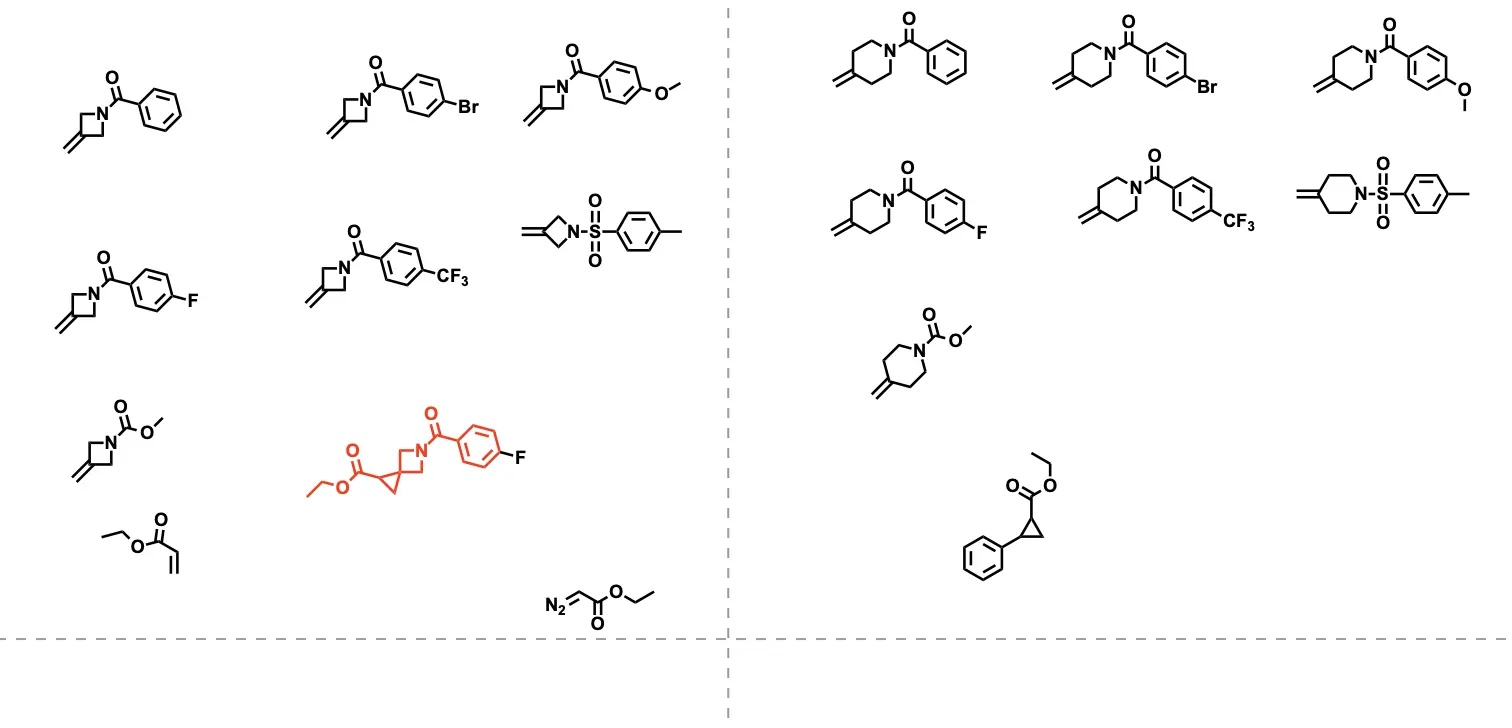
I designed and synthesised a structurally varied substrate collection to probe the scope of carbene-transfer reactions. The work included 15 exocyclic-methylene compounds across four- and six-membered nitrogen-containing scaffolds, alongside carbene-transfer reagents and representative cyclopropane products.
This programme required route selection, analogue design, reaction optimisation, chromatographic purification and structure confirmation by NMR and high-resolution mass spectrometry. It demonstrates my ability to move beyond a single target and build a purposeful library around a mechanistic question.
Coumarin scaffolds and carbene precursors
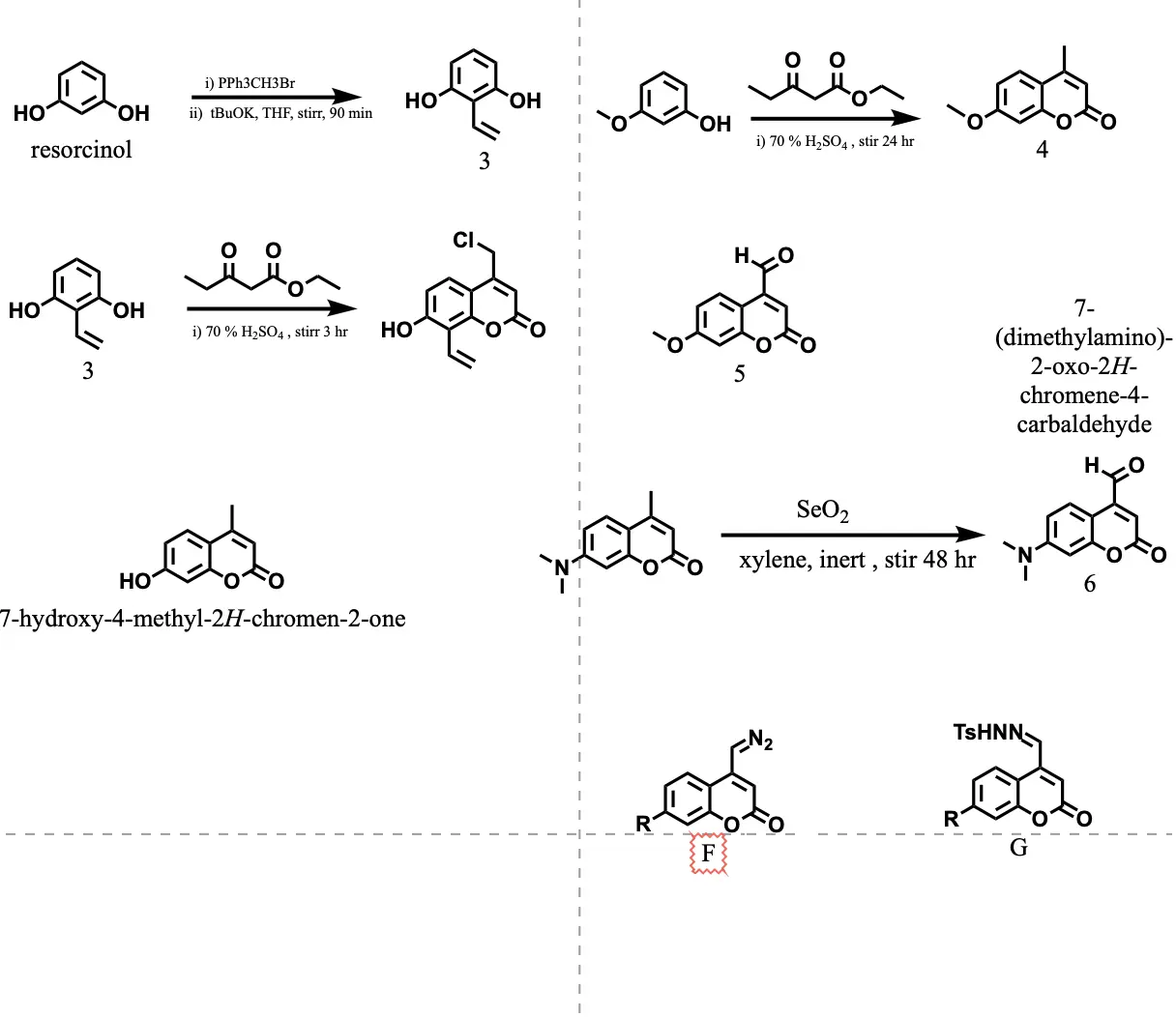
I developed multi-step routes to substituted coumarin scaffolds and their functionalised derivatives. This work combined carbon–carbon bond formation, acid-mediated cyclisation, selective functional-group interconversion and oxidation, followed by progression towards diazo and tosylhydrazone carbene precursors.
The chemistry strengthened my experience in planning convergent sequences, managing reactive intermediates and adapting routes when substrate electronics or substitution patterns changed reaction behaviour.
Diazirine synthesis
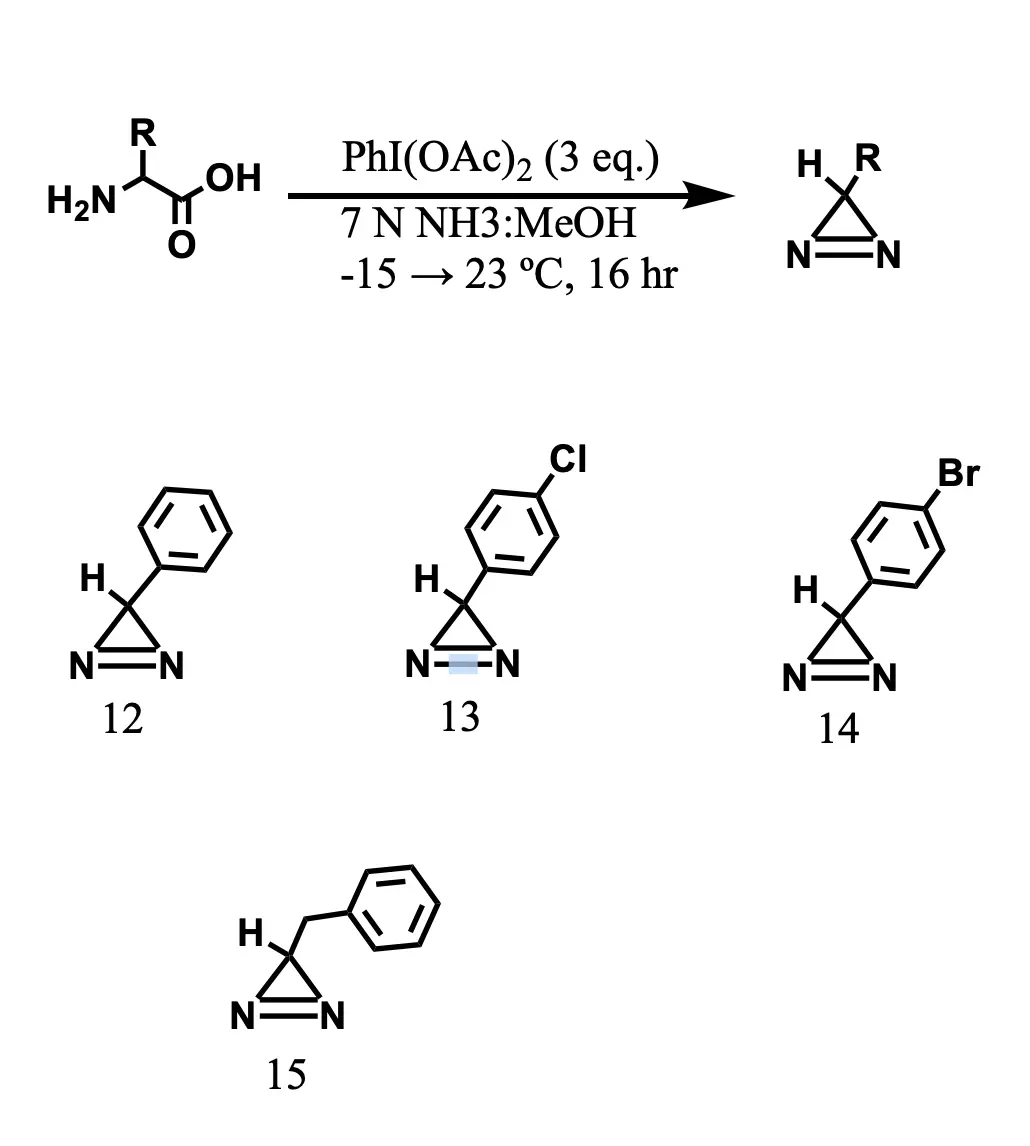
I synthesised and characterised a 10-member diazirine scaffold set, including aryl- and benzyl-substituted analogues. The work involved oxidative conversion of amino-acid-derived starting materials, low-temperature reaction control, isolation of compact nitrogen-rich heterocycles and confirmation by NMR and HRMS.
Diazirines expanded my experience with strained three-membered rings, nitrogen-rich functional groups and molecules relevant to chemical-biology probe development.
Porphyrin and BODIPY analogue synthesis
During my MSc research, I designed and synthesised more than 15 π-extended BODIPY dyes and cationic porphyrin analogues for photodynamic antimicrobial and anticancer studies. The programme used condensation, halogenation and quaternisation chemistry to tune conjugation, charge and photophysical behaviour.
Systematic biological and photophysical evaluation connected halogenation, π-extension and cationic charge with molecular performance. This work developed my ability to use synthesis as a tool for structure–activity analysis and contributed to three peer-reviewed publications.
What I bring as a synthetic chemist
Route design
Retrosynthetic analysis · Multi-step planning · Scaffold diversification · Analogue-library strategy
Reaction development
Condition screening · Inert-atmosphere synthesis · Schlenk techniques · Troubleshooting and optimisation
Purification
Column chromatography · Preparative workflows · RP-HPLC · Purity assessment
Structure confirmation
¹H, ¹³C and 2D NMR · HRMS · IR · UV–visible and fluorescence spectroscopy
I use synthesis to create the molecular diversity needed to ask sharper questions—whether the endpoint is catalysis, chemical biology, medicinal chemistry or more sustainable chemical production.