
Designing molecules and catalysts for more sustainable chemistry.
I am a synthetic organic chemist working across two independent but connected pillars: small-molecule synthesis and artificial metalloenzymes. I build structurally diverse compound libraries and combine synthetic Ir(III) and Zn(II) porphyrins with engineered proteins to explore selective catalysis under milder conditions.
Multi-step synthesis · Compound libraries · Protein engineering · Molecular characterisation
PhD viva passed · awaiting graduation · actively seeking opportunities
Towards more sustainable chemical production
Chemical synthesis is essential to medicines and new technologies, yet many transformations still depend on harsh conditions, high energy inputs or processes that generate avoidable waste. I am interested in a different approach: combining the precision of synthetic organic chemistry with the selectivity of engineered biological systems.
Synthetic chemistry gives me control over molecular structure. Artificial metalloenzymes offer a route towards selective reactivity under mild, biologically compatible conditions. Together, these distinct research pillars support my long-term goal of helping develop cleaner and more efficient ways to make valuable molecules.
Directing reactions towards the desired product and reducing unwanted by-products.
Exploring catalysis that can operate in biologically compatible environments.
Designing molecules and catalytic systems with efficiency and function in mind.
A toolkit spanning molecules and proteins
Synthetic organic chemistry
Multi-step organic and organometallic synthesis, analogue design, scaffold diversification and structure–activity analysis.
Biocatalysis & protein engineering
Engineered cytochrome b562 variants, recombinant protein workflows and synthetic cofactor assembly.
Bioconjugation
Protein–small molecule conjugation, metalloporphyrin functionalisation and quantitative cofactor-binding studies.
Analytical science
NMR, HPLC, HRMS, UV–visible, fluorescence and IR spectroscopy, with assay and protocol development.
Two pillars. One ambition: more sustainable chemical production.
Synthetic organic chemistry provides precise molecular control; artificial metalloenzymes explore selective transformations under mild, biologically compatible conditions. Each is an independent body of expertise, connected by a shared purpose.
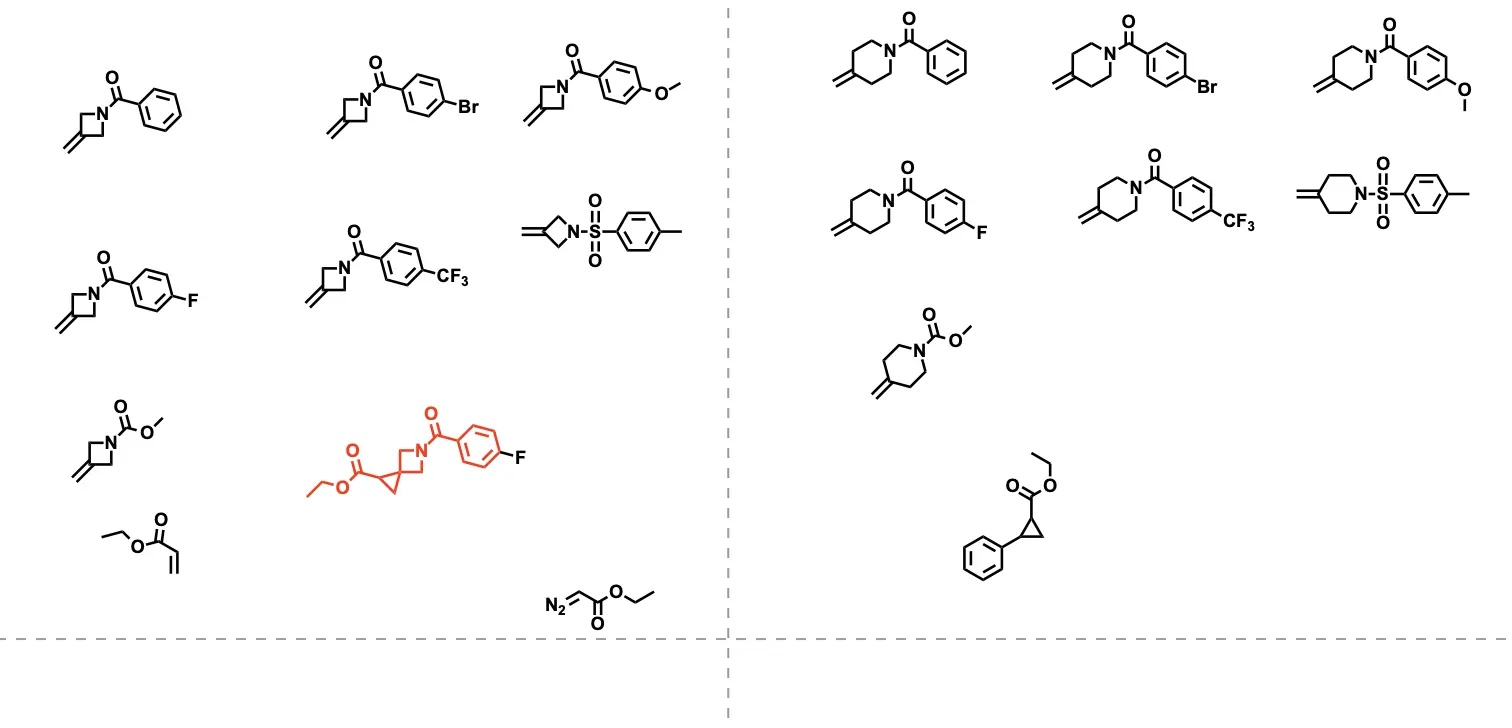
Building molecular diversity
Multi-step route design, scaffold diversification, reaction optimisation, purification and full characterisation across 40+ compounds.
- 15 exocyclic-methylene substrates
- 10 diazirine scaffolds
- 15+ porphyrin and BODIPY analogues
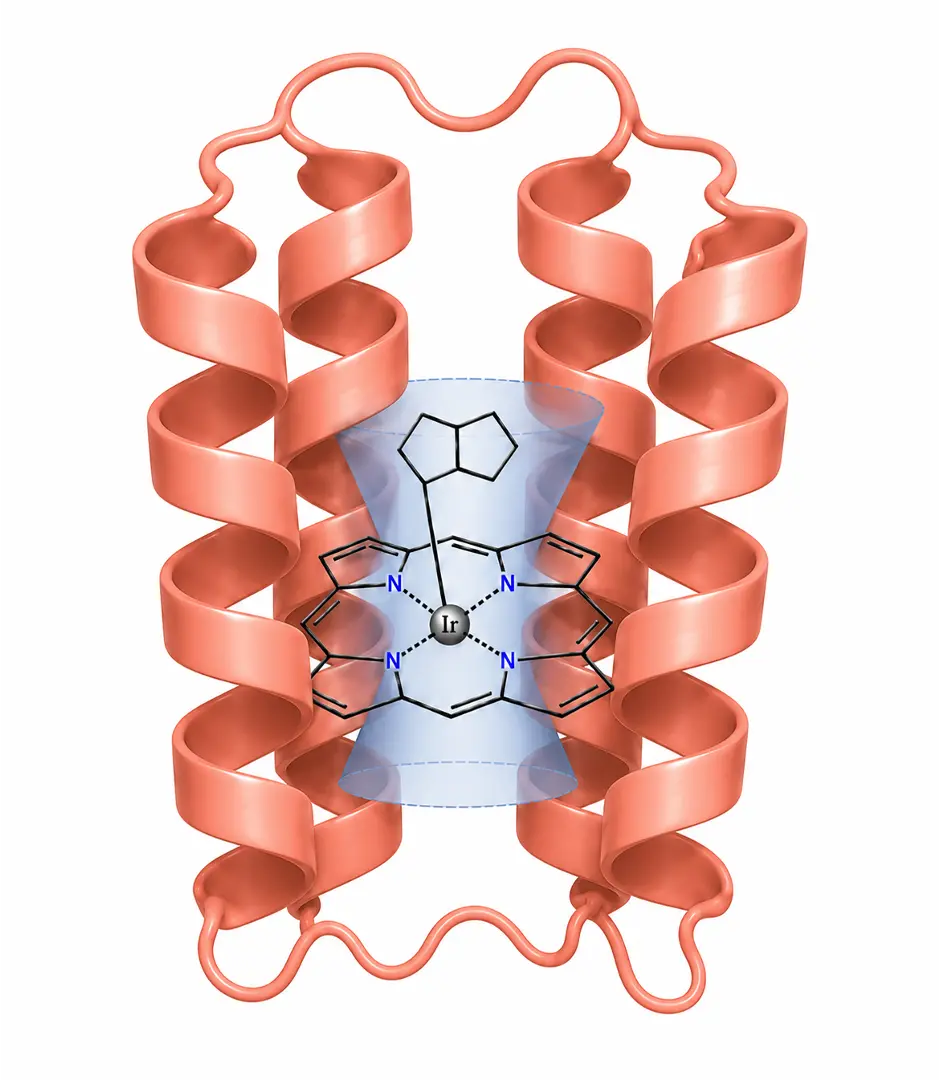
Creating non-natural catalytic systems
Synthetic Ir(III) and Zn(II) porphyrins combined with engineered cytochrome b562 variants to pursue selective reactivity under mild, biologically compatible conditions.
- Metalloporphyrin design and synthesis
- Protein expression and engineering
- Spectroscopic binding and catalysis studies
Chemistry for health and more sustainable production.
Seeking roles across synthetic chemistry, medicinal chemistry, chemical biology, biocatalysis and drug discovery.